
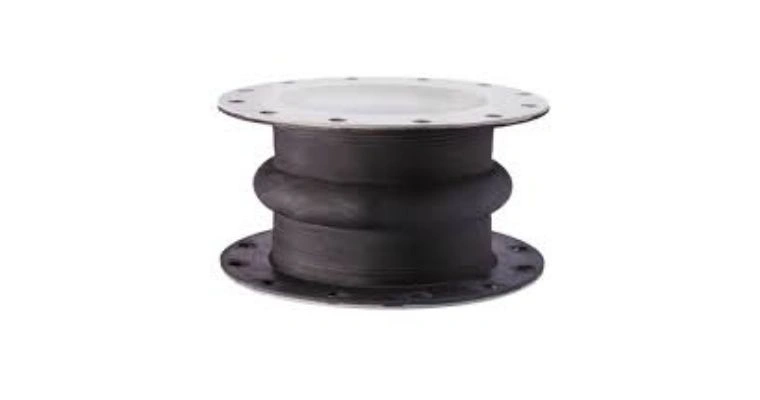
If you have ever spent a day in a massive chemical plant, a pharma unit, or any big manufacturing facility in India, you’ve probably spotted those zig-zag, accordion-looking parts fitted between heavy steel pipes. Let's be clear, those aren't just for show. They are basically the "lungs" and the "shield" of your entire piping system. In our field, we call them Industrial Bellows or expansion joints.
At Neeta Enterprises, we’ve spent decades perfecting these parts in our Mumbai facility. Why do we care so much? Because without a high-quality industrial bellow, a piping system is pretty much a ticking time bomb.
Think about it, high pressure, crazy heat, and nasty chemicals can snap rigid pipes like twigs. In this guide, we’re going to talk about bellows for industrial uses, why they are a must-have for your plant, and how picking the right material can save you a fortune in repair bills.
What exactly is an Industrial Bellow?
In simple terms, an industrial bellow is a flexible element designed to absorb movement in a piping system. Think about it-pipes aren't static. When hot chemicals flow through them, the metal expands. When they cool down, the metal contracts. If your pipes are rigid and "bolted down" too tightly, this constant expanding and shrinking will eventually crack the pipes or blow out the valves.
Industrial bellows act as a cushion. They can compress, extend, and even bend slightly to absorb this thermal expansion and vibration. As a leading manufacturer of PTFE bellows in Maharashtra, we see them as the ultimate insurance policy for your infrastructure.
Why Does Your Plant Need Industrial Bellows? (The Science of Expansion)
A lot of managers ask us, why can't we just use thick steel pipes?" Well, because rigidity is the enemy. If a pipe can’t move, it’s going to break. Flexibility is the real secret to a long-lasting plant.
Managing Thermal Expansion
When hot liquid or gas rushes through a pipe, the metal expands. It has to go somewhere! If the pipes are stuck tight, they’ll buckle or bend. An industrial bellow squishes like an accordion to give that extra length some room to breathe.
Stress Reduction on Flanges
If your pump is shaking and your pipes are stiff, all that force hits your "Flanges" and "Valves" directly. Industrial bellows take that hit for you, keeping your whole setup safe from a total mechanical breakdown.
Different Materials for Different Needs: Every Industry has its Own Need
See, every industry is built differently. You just can’t treat a corrosive acid plant and a basic water supply unit with the same logic. That’s why the materials used to make an industrial bellow have to change. You need specific stuff to handle specific headaches, like extreme heat, high pressure, or chemicals that eat through metal.
Common Types of Industrial Bellows Used in India
1. Rubber Bellows (The Vibration Absorbers)
Rubber Bellows are your go-to flexible pipe connectors for water treatment or HVAC systems. Their primary job is to kill that high-frequency vibration that makes pipes rattle. They are great for water, but honestly, if you throw harsh chemicals at them, they’re going to melt or crack pretty fast.
2. Leather Bellows (The Protective Guards)
Now, Leather Bellows aren't meant to hold pressure inside a pipe. Instead, we use them as custom bellows covers for moving machine parts. They protect cylinder rods from dust, junk, and sparks. They’re all about keeping the outside of your machine clean and moving smoothly.
3. Feather Bellows (The Precision Specialists)
These are super lightweight and very sensitive industrial bellows. You’ll usually find them in labs or medical devices where you only have tiny movements but you need 100% precision.
4. Metal Rubber Bellows (The Hybrid Power)
Metal Rubber Bellows is a bit of a mix, you get the toughness of metal with the "bounce" of rubber. They work wonders in heavy-duty vibration zones where a standard rubber piece would just burst under the pressure.
5. PTFE Industrial Bellows
When your pipes are carrying sulfuric acid or aggressive solvents, you don't mess around. Only PTFE industrial bellows can survive that. These are the ultimate corrosion-resistant expansion joints because they simply don't react with chemicals. At Neeta Enterprises, we make these from 100% virgin-grade PTFE so you can sleep easy.
Key Features and Benefits of Industrial Bellows
Putting an industrial bellow in your factory isn't just a technical choice, it’s a financial one. It’s like buying insurance for your machines. Here’s why they matter:
- Excellent Movement Absorption: Pipes move in three ways, lengthwise (Axial), sideways (Lateral), and bending (Angular). A solid industrial bellow soaks up all three so your pipes don't have to.
- Vibration Dampening: Heavy pumps and motors hum and shake constantly. Industrial bellows act like a wall that stops those vibrations from traveling down the line and loosening all your joints.
- Leak Prevention & Safety: These parts keep a tight seal. In a chemical plant, a leak isn't just a mess, it’s a huge safety risk. These keep your workers safe.
- Cost-Effective Maintenance: When you take the stress off your valves and pumps, they last longer. Simple as that. You won't be calling the repair guy every two weeks.
- Thermal Stability: Things get hot and cold in a factory. High-quality industrial bellows (especially the PTFE ones) don’t care about the temperature, they just keep working.
The Magic of PTFE Expansion Joints: Why Material Matters
Not every industrial bellow is built the same. Metal ones are okay, but they get "fatigued" (they get tired and snap) or they rust out. That’s why at Neeta Enterprises, we focus on custom PTFE expansion joints. PTFE is basically a miracle material for our world.
Technical Superiority of PTFE in Industrial Bellows
- Zero Corrosion: As a corrosion-resistant expansion joint, PTFE doesn't give a damn about acids or alkalis. It won't rust.
- High Temperature Range: It survives everything from -200°C to +260°C. That’s insane range.
- Non-Stick Surface: Nothing sticks to it. No "gunk" or chemical buildup inside your industrial bellows.
Installation & Maintenance: Avoiding Costly Mistakes
An industrial bellow only works if you treat it right. In our Mumbai shop, we tell every customer:
- Don't Over-squish it: Never compress it past what it’s designed for.
- Line it up right: Make sure your pipes aren't crooked, or the industrial bellow will be under constant sideways stress.
- Look at it once in a while: Do a visual check every 6 months. If it looks like it’s "ballooning" or wearing out, fix it before it pops.
Frequently Asked Questions (FAQ)
Q1. What is the main purpose of an industrial bellow?
Think of it as a flexible pipe connector. It’s there to handle the expansion, the shaking, and the misaligned pipes so your system stays stable and leak-free.
Q2. How long do PTFE industrial bellows last?
If you get a high-quality one from a solid manufacturer in India like Neeta Enterprises, you’re looking at 3 to 5 years, maybe more, depending on the chemicals you’re using.
Q3. Can industrial bellows handle high pressure?
Yes, absolutely. But you need the right design, usually with metal rods on the outside for extra strength. We provide these for heavy industries all over Maharashtra.
Q4. What happens if an industrial bellow fails during operation?
Bellow failure can lead to sudden leaks, pressure drops, or even pipe bursts. This is why we always recommend a high-voltage spark test during manufacturing to detect microscopic holes that could lead to a disaster.
Q5. Are industrial bellows and expansion joints the same thing?
In simple terms, yes. "Industrial Bellows" refers to the flexible element itself, while an "Expansion Joint" is the complete assembly (including flanges and rods) that you install in the pipeline. Both terms are used interchangeably in the Indian market.
Conclusion: Don’t Let Your Pipes Crack Under Pressure
An industrial bellow might look like a small, zig-zaggy part, but it’s doing a massive job. It keeps your whole factory running. Picking a cheap material or a bad design is a recipe for a disaster and an expensive shutdown. When you choose high-quality PTFE industrial bellows from Neeta Enterprises, you’re getting quality, testing, and "Industrial Grade" peace of mind.
Are your pipes ready for the next round?
If you’re looking for reliable and custom industrial bellows in Mumbai or anywhere in India give Neeta Enterprises a call. Let’s build you a system that’s actually flexible and strong.
By Neeta | Published on March 5, 2026